


When insolvency meets regulation
The ordinary insolvency processes do not operate in isolation from the rest of Singapore’s regulatory framework. The regulatory dimension tends to arise in a few recognisable situations:
Regulated financial institutions.
Entities supervised by the Monetary Authority of Singapore (MAS), such as banks, insurers, and certain capital-markets players, sit within special supervisory and resolution arrangements.
Their distress is not handled by the ordinary winding-up process alone, and regulator involvement, consent, or a special regime can apply.
Other regulated or licensed sectors.
Many businesses hold licences or answer to a sector regulator, and those obligations do not stop when the company becomes insolvent.
Listed companies are the clearest example: a company on the Singapore Exchange remains subject to SGX listing rules and continuing disclosure obligations throughout an insolvency, alongside the ordinary insolvency process.
The public interest.
The IRDA itself recognises a public dimension: where a company is used for an unlawful purpose or in a way prejudicial to the public interest or national security, the court may order a winding up.
The regulatory obligations that come with an appointment
Insolvency practitioners themselves operate within a regulated framework, and an appointment carries duties that reach beyond the creditors. These can include reporting obligations where an investigation uncovers misconduct, cooperation with regulators, and attention to the conduct of directors, which may feed into director-duties and disqualification considerations. Handling these obligations properly is part of conducting a regulated insolvency to standard.
Why the regulatory dimension demands care
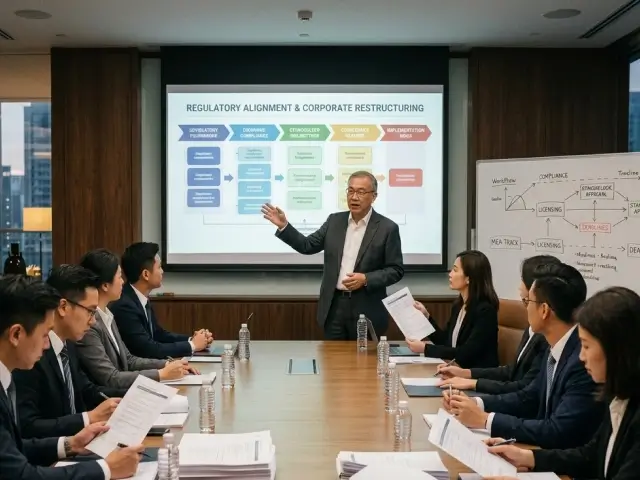
A regulated insolvency has more stakeholders and more constraints than a standard one. Moving without regard to a regulator’s requirements can invalidate steps, create liability, or damage outcomes for everyone involved. The right approach is to map the regulatory interface at the outset and to keep regulators appropriately engaged throughout.
How DHA+ pac approaches regulatory insolvency
DHA+ pac has acted as liquidator to companies listed on the Singapore Exchange, including SBI Offshore Ltd, Mirach Energy Ltd, and Magnus Energy Group Ltd. Listed-company insolvency brings obligations that a private company liquidation does not: continuing disclosure, the expectations of a dispersed shareholder base, and the exchange’s own requirements running alongside the statutory process.
We have worked within Singapore’s corporate and regulatory environment since 1994, and we treat the regulatory interface as part of the engagement rather than an afterthought, mapping it at the outset and keeping regulators appropriately engaged throughout.
FAQ
Not necessarily. Where an entity is supervised by a financial regulator such as MAS, special supervisory or resolution arrangements may apply, and regulator involvement or consent can be required. Listed companies carry a further layer, since SGX listing and disclosure obligations continue to apply during an insolvency. The ordinary process is not the whole picture.
An appointment can carry reporting and cooperation obligations, particularly where an investigation reveals misconduct. Conducting these properly is part of the role.
Among the grounds in the IRDA, the court may order a winding up where a company is used for an unlawful purpose or in a manner prejudicial to the public interest or national security. It reflects the public dimension that some insolvencies carry.
Legal references: IRDA s.125 (circumstances for winding up by the court, including public-interest grounds).
Not sure where to start?
If an insolvency you are dealing with involves a regulated entity or a regulator’s interest, the regulatory interface needs handling from the start.
Contact us for a confidential review.